

Many executives still believe customer experience is simply a friendly transaction at a checkout counter or a helpful service call. This outdated view misses the strategic reality: customer experience in 2026 is an integrated, intelligent system that unifies every stakeholder touchpoint, from employees to partners to digital interfaces, into a seamless journey. This guide clarifies what truly defines modern customer experience, explores the frameworks professionals use to excel, and reveals how leading organizations align CX strategy with measurable business outcomes. You’ll discover actionable principles to transform your approach from isolated interactions to total experience excellence.
Table of Contents
- Understanding Customer Experience: Beyond Transactions To Total Experience
- The CXPA Customer Experience Framework: Core Competencies For Success
- Evolution Of Customer Expectations And Strategic Implications
- Measuring And Implementing Customer Experience For Business Impact
- Explore Expert Customer Experience Leadership And Strategy Services
- Frequently Asked Questions
Key takeaways
| Point | Details |
|---|---|
| Total Experience unifies all stakeholders | Modern CX integrates customer, employee, partner, and digital touchpoints into one intelligent system rather than isolated interactions. |
| CXPA framework defines core competencies | Six essential competencies including strategy, insights, metrics, design, culture, and implementation guide professional CX practice. |
| Evolving expectations demand anticipation | Customers now expect personalized, intuitive experiences that predict needs before they articulate them. |
| Measurement drives strategic impact | Linking CX metrics like NPS and ROI to financial outcomes ensures initiatives align with business goals. |
| Culture sustains excellence | Employee empowerment and organizational accountability are critical for maintaining continuous CX improvement. |
Understanding customer experience: beyond transactions to total experience
Customer experience transcends individual touchpoints to become a strategic discipline that shapes entire organizational ecosystems. Total Experience is the unification of customer, employee, partner, and digital touchpoints into an integrated, intelligent whole. This approach recognizes that every interaction, whether a customer browses your website, an employee uses internal tools, or a partner accesses your platform, contributes to a unified perception of your brand.
The shift from transactional thinking to total experience requires organizations to break down silos that traditionally separated customer service, employee engagement, and technology operations. When these domains operate independently, friction multiplies and opportunities for differentiation vanish. Total Experience design rests on five core principles that guide this integration:
- Unified stakeholder journeys that eliminate handoffs and gaps between customer, employee, and partner interactions
- Technology as the connective backbone enabling seamless data flow and personalized responses across all channels
- Proactive anticipation of needs through predictive analytics rather than reactive problem solving
- Continuous feedback loops that capture insights from every stakeholder group to inform strategy
- Organizational alignment where every department understands its role in delivering superior experiences
This holistic view transforms how you allocate resources and measure success. Instead of optimizing isolated customer service metrics, you examine how employee experience drives superior customer experience by ensuring your team has the tools, training, and empowerment to deliver value. Technology becomes more than infrastructure; it’s the intelligent layer that connects disparate systems, surfaces relevant data in real time, and enables personalization at scale.
“The organizations leading customer experience excellence in 2026 don’t just serve customers well; they orchestrate entire ecosystems of value creation where every participant, from frontline employees to digital interfaces, contributes to seamless, memorable journeys.”
Moving beyond silos demands executive commitment to shared goals, integrated platforms, and cross-functional teams. When marketing, operations, IT, and human resources collaborate around unified experience objectives, you unlock innovation that isolated departments cannot achieve. This foundation sets the stage for applying proven frameworks that translate strategic vision into operational excellence.
The CXPA customer experience framework: core competencies for success
The Customer Experience Professionals Association established a comprehensive framework that defines what practitioners must master to deliver exceptional experiences. The CXPA CX Framework is the foundation for the CCXP exam, outlining essential knowledge, skills, and abilities across six core competencies. Understanding these competencies helps you build teams, allocate training resources, and assess your organization’s CX maturity.
| Competency | Weighting | Focus Areas |
|---|---|---|
| Customer Insights & Understanding | 18% | Research methods, persona development, journey mapping, data analysis |
| CX Strategy & Governance | 17% | Vision alignment, business case development, roadmap creation, stakeholder engagement |
| Metrics, Measurements & ROI | 20% | KPI selection, financial modeling, performance dashboards, continuous improvement |
| CX Design & Innovation | 15% | Service design, touchpoint optimization, prototyping, testing methodologies |
| Culture & Accountability | 19% | Change management, employee engagement, leadership alignment, organizational structure |
| Implementation & Execution | 11% | Project management, technology enablement, process optimization, vendor management |
The framework’s distribution reveals where organizations should concentrate development efforts. Metrics and measurements claim the highest weighting at 20%, reflecting the business imperative to demonstrate CX strategy customer loyalty impact through quantifiable outcomes. Culture and accountability follows closely at 19%, acknowledging that technology and processes alone cannot sustain excellence without organizational commitment.
Customer insights form the foundation for all other competencies. Key focus areas within this domain include:
- Conducting qualitative and quantitative research to understand customer motivations, pain points, and expectations
- Developing detailed personas that represent distinct customer segments and their unique needs
- Mapping current state journeys to identify friction points and moments of truth
- Analyzing behavioral data to uncover patterns that inform strategic decisions
CX strategy translates insights into actionable plans. This competency emphasizes:
- Articulating a clear vision for customer experience that aligns with overall business objectives
- Building compelling business cases that secure executive sponsorship and resource allocation
- Creating roadmaps that prioritize initiatives based on impact and feasibility
- Engaging stakeholders across functions to ensure coordinated execution
Pro Tip: Aligning your CX strategy with overall business goals increases ROI and organizational buy-in by demonstrating how experience improvements directly contribute to revenue growth, cost reduction, and competitive differentiation.
The framework serves as both a diagnostic tool and a development guide. Assess your team’s strengths across these six competencies, then invest in training and hiring to close gaps. Organizations that master all six dimensions create sustainable competitive advantages, while those excelling in only one or two struggle to maintain momentum as markets evolve. Understanding why measure customer experience helps you prioritize the metrics competency that links every initiative to business outcomes.
Evolution of customer expectations and strategic implications
Customer expectations are evolving rapidly, demanding personalized, intuitive, and anticipatory experiences. What delighted customers three years ago now represents table stakes. In 2026, customers expect organizations to remember their preferences across channels, predict their needs before they articulate them, and resolve issues proactively rather than reactively. This acceleration creates both challenges and opportunities for strategic leaders.

The shift toward anticipatory experiences stems from widespread adoption of AI and machine learning across consumer technology. When customers interact with recommendation engines that accurately predict their preferences or virtual assistants that understand context from previous conversations, they expect similar intelligence from every brand. Organizations that fail to meet these elevated standards face immediate competitive disadvantages as customers migrate to providers offering superior experiences.
Adapting to fast-evolving demands requires strategic actions across multiple dimensions:
- Invest in unified data platforms that consolidate customer information from every touchpoint into accessible, actionable profiles
- Deploy predictive analytics that identify patterns in behavior and trigger proactive outreach before issues escalate
- Empower frontline employees with real-time customer context so they can personalize interactions without lengthy authentication processes
- Design flexible systems that allow rapid iteration based on feedback rather than annual redesign cycles
- Cultivate organizational agility that treats customer expectations as dynamic variables requiring continuous monitoring
Integrating data and technology to personalize experiences in real time separates leaders from laggards. This integration goes beyond basic segmentation to deliver individualized interactions at scale. When a customer contacts support, the representative immediately sees purchase history, previous interactions, stated preferences, and predictive insights about likely needs. This context enables efficient resolution and opportunities to add value through relevant recommendations.
Pro Tip: Anticipate needs by leveraging predictive analytics and the voice of customer programs that capture feedback continuously rather than through periodic surveys, allowing you to identify emerging trends before they become widespread complaints.
The strategic implications extend beyond customer-facing operations to influence product development, marketing strategy, and organizational structure. Customer experience trends 2026 tech leaders must embrace include composable architectures that enable rapid assembly of new capabilities, AI-driven personalization engines that learn from every interaction, and omnichannel orchestration platforms that maintain context as customers move between digital and physical touchpoints.
Executives who view evolving expectations as opportunities rather than burdens position their organizations for sustained growth. Each new customer demand reveals an unmet need that, when addressed effectively, creates differentiation and loyalty. The organizations thriving in this environment treat customer expectations as innovation signals that guide strategic investments in technology, talent, and processes.
Measuring and implementing customer experience for business impact
Translating customer experience strategy into measurable business results requires disciplined approaches to metrics, implementation, and cultural accountability. Metrics, Measurements, and ROI is a core competency representing 20% of the CXPA CX Framework, reflecting its critical role in securing resources and demonstrating value. Organizations that link CX initiatives to financial outcomes gain executive support and sustain long-term commitment even during economic uncertainty.
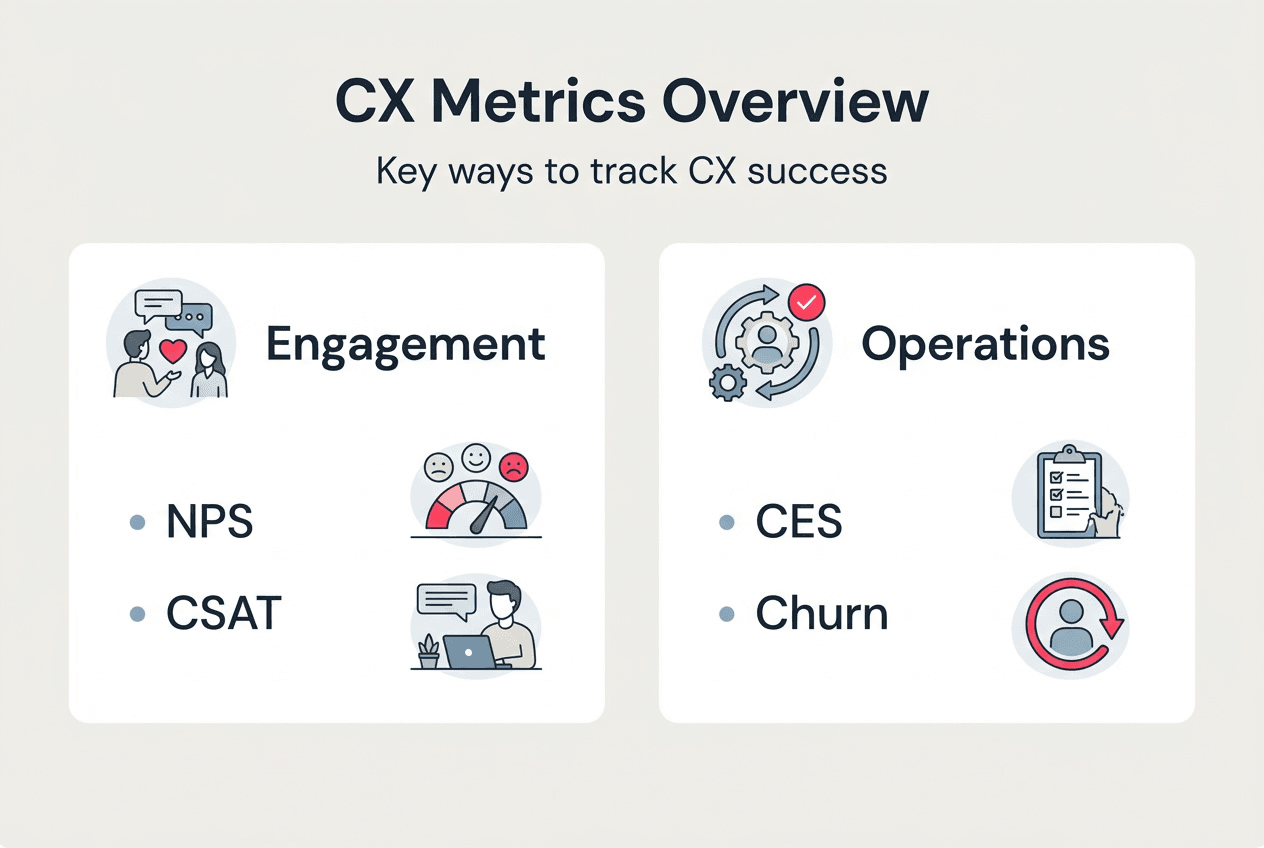
| Metric | Definition | Business Impact |
|---|---|---|
| Net Promoter Score (NPS) | Likelihood customers will recommend your brand | Correlates with revenue growth and customer lifetime value; scores above 50 indicate strong loyalty |
| Customer Satisfaction (CSAT) | Satisfaction rating for specific interactions | Identifies friction points in journeys; improvements reduce churn and support costs |
| Customer Effort Score (CES) | Ease of completing tasks or resolving issues | Lower effort drives repeat purchases; reducing effort by one point can increase loyalty by 20% |
| Customer Lifetime Value (CLV) | Total revenue expected from a customer relationship | Guides acquisition spending and retention priorities; increasing CLV by 10% significantly impacts profitability |
| Return on Investment (ROI) | Financial return from CX initiatives | Justifies continued investment; typical CX programs deliver 3:1 ROI within 18 months |
Selecting the right metrics depends on your strategic objectives and organizational maturity. Early-stage CX programs often focus on foundational metrics like CSAT and CES that highlight immediate improvements, while mature organizations emphasize predictive metrics like CLV and churn probability that inform proactive strategies. Regardless of which metrics you prioritize, ensure they connect directly to business outcomes executives care about: revenue growth, cost reduction, market share expansion, or competitive differentiation.
Implementing CX initiatives effectively requires structured approaches that move from insight to action:
- Establish baseline measurements across key metrics to quantify current performance and identify improvement opportunities
- Prioritize initiatives based on potential business impact, implementation feasibility, and alignment with strategic objectives
- Secure executive sponsorship by presenting clear business cases that articulate expected ROI and resource requirements
- Form cross-functional teams with representatives from customer-facing, operational, and technology groups to ensure coordinated execution
- Deploy initiatives in phases, starting with pilot programs that validate assumptions before full-scale rollout
- Monitor leading indicators continuously to detect issues early and adjust tactics without waiting for lagging metrics to decline
- Communicate results transparently across the organization to build momentum and reinforce the connection between CX and business success
Culture and Accountability is a core competency, representing 19% of the CXPA CX Framework. This emphasis reflects the reality that sustainable CX excellence requires more than processes and technology; it demands organizational commitment where every employee understands their role in delivering superior experiences. Leaders cultivate this culture by tying performance evaluations to customer outcomes, celebrating teams that innovate on behalf of customers, and removing barriers that prevent employees from doing what’s right.
Employee empowerment plays a crucial role in sustaining CX improvements. When frontline staff have authority to resolve issues without escalating through multiple approval layers, resolution times decrease and satisfaction increases. Empowerment extends beyond authority to include access to information, training on customer-centric problem solving, and psychological safety to experiment with new approaches. Organizations that invest in customer experience leadership development create cascading effects as managers model customer-centric behaviors and coach their teams to do the same.
Innovation and continuous evolution separate organizations that maintain CX leadership from those that plateau after initial gains. Establish mechanisms for capturing ideas from employees who interact with customers daily, allocate resources for experimentation, and treat failures as learning opportunities rather than career setbacks. The master cx design process guide 2026 growth emphasizes iterative approaches that test assumptions quickly and refine solutions based on real customer feedback.
Explore expert customer experience leadership and strategy services
Navigating the complexity of modern customer experience requires more than understanding frameworks and principles. It demands strategic expertise to integrate CX initiatives with business objectives, technology platforms, and organizational capabilities. Many executives recognize the imperative to elevate customer experience but struggle with where to start, how to prioritize competing initiatives, and which investments will deliver the greatest returns.
Xverse’s customer experience leadership services help organizations translate CX vision into operational reality. We combine strategic consulting with hands-on implementation support to build capabilities that sustain excellence beyond initial projects. Our approach integrates the proven frameworks discussed in this guide with your unique business context, ensuring cx strategy customer loyalty initiatives align with growth objectives and competitive positioning. Whether you’re launching your first formal CX program or advancing from good to exceptional, Xverse partners with you to accelerate transformation and deliver measurable business impact.
Frequently asked questions
What differentiates customer experience from customer service?
Customer service represents a single touchpoint focused on resolving specific issues or answering questions, while customer experience encompasses every interaction a customer has with your organization across all channels and throughout the entire relationship lifecycle. Service is reactive and transactional; experience is proactive and strategic, shaping perceptions through intentional design of journeys, touchpoints, and emotional connections.
How does Total Experience influence business growth?
Total Experience drives growth by creating competitive differentiation that’s difficult to replicate, as it requires organizational alignment across customer, employee, partner, and digital domains. When all stakeholders have superior experiences, customers receive more consistent value, employees deliver better service, and partners collaborate more effectively, resulting in higher retention rates, increased referrals, and premium pricing power that directly impact revenue and profitability.
What is the CXPA CX Framework and why is it important?
The CXPA CX Framework defines six core competencies that customer experience professionals must master: customer insights, strategy, metrics, design, culture, and implementation. It’s important because it provides a common language and knowledge foundation for the profession, guides capability development for individuals and teams, and serves as the basis for the Certified Customer Experience Professional (CCXP) credential that validates expertise in the field.
How can organizations effectively measure ROI on CX investments?
Effective ROI measurement requires linking CX metrics like NPS, CSAT, and CES to financial outcomes such as revenue growth, cost reduction, and customer lifetime value through statistical analysis and longitudinal tracking. Establish baseline performance before initiatives launch, track both leading indicators like satisfaction and lagging indicators like revenue, and use control groups when possible to isolate the impact of specific CX improvements from other business factors.
What role does company culture play in successful CX efforts?
Company culture determines whether CX initiatives become embedded practices or temporary programs that fade when leadership attention shifts. A customer-centric culture where employees at all levels understand how their work impacts experiences, feel empowered to make decisions that benefit customers, and see leaders consistently prioritizing experience over short-term metrics creates the foundation for sustained excellence. The master cx design process guide 2026 growth emphasizes that without cultural alignment, even well-designed initiatives struggle to deliver lasting results.