CX Training Hospitality Saudi Arabia: Building Capability
Prepare for the winter tourism peak by shifting from outsourced workshops to internal CX academies that drive measurable commercial impact.
Praveen Kumar · Founder & Director, Xverse Digital
The short answer
Building internal CX capability in Saudi hospitality requires shifting from outsourced, one-off workshops to continuous, embedded learning. By establishing internal academies and integrating CX management loops into daily operations, hotel operators ensure service consistency, reduce external dependency, and directly link staff enablement to commercial growth.
59%
Customers leaving after bad experiences
PwC research from 2025 highlights the cost of poor service.
2x
Increase in positive guest feedback
Renascence reported in 2026 on the impact of glocalized journey reviews.
353%
Return on employee training investment
Accenture data from 2026 demonstrates the financial value of enablement.
80%
Revenue increase for CX leaders
Qualtrics found in 2025 that customer-centric companies outperform peers.
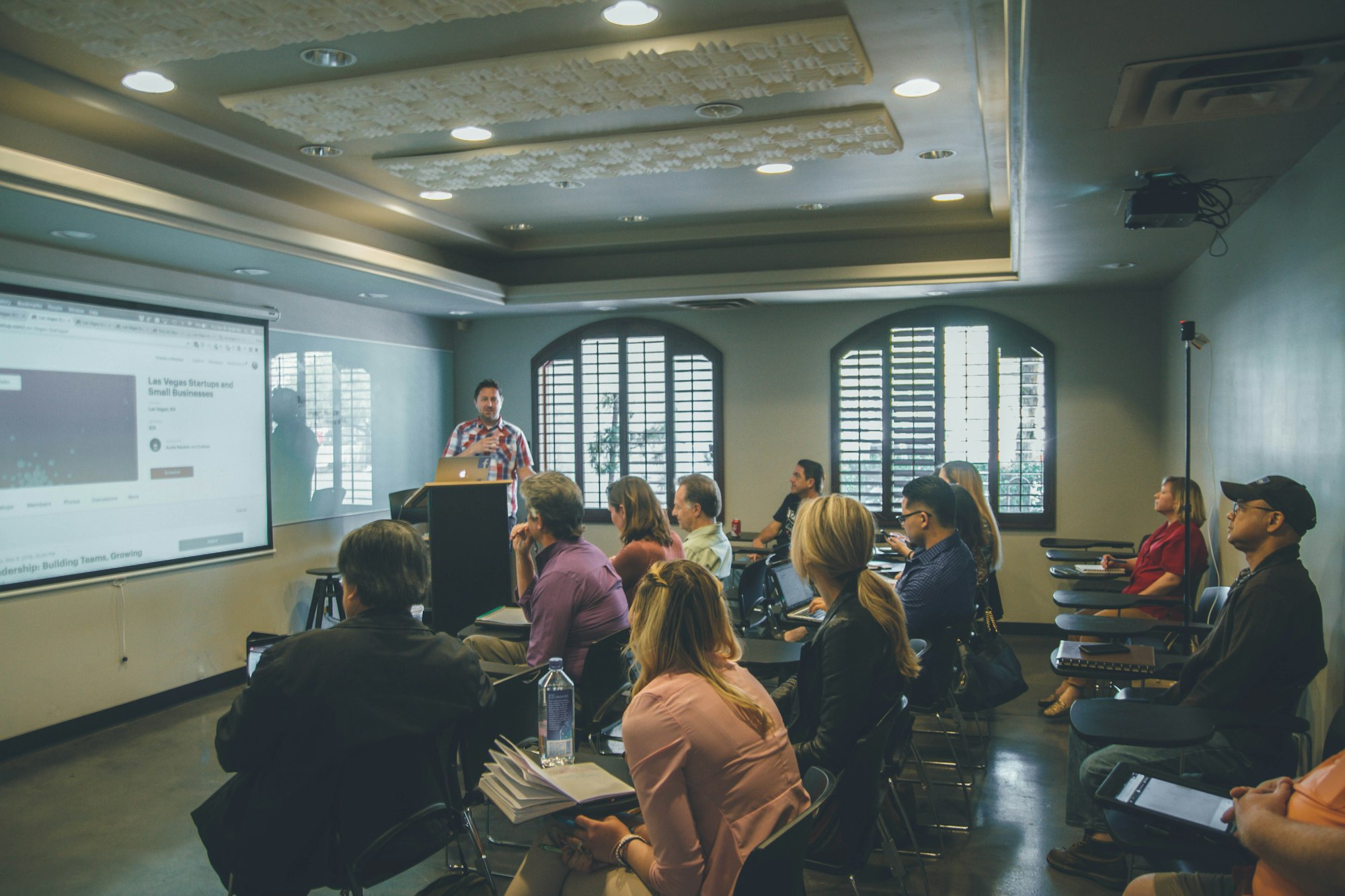
It is July 2026, and across Riyadh and Jeddah, hotel lobbies are experiencing their seasonal summer lull. In three months, the October launch of Riyadh Season and the winter tourism peak will push occupancy rates to capacity. Right now, operators are rushing to execute CX training hospitality Saudi Arabia programmes to prepare their teams. We see the same pattern every year: external facilitators are flown in, staff are pulled into windowless conference rooms for three days of roleplay, and by November, the service inconsistencies return. The fundamental error is treating experience as a decoration applied through a workshop, rather than a strategy embedded in the operating model.
Why does outsourced training fail to build lasting capability in CX training hospitality Saudi Arabia?
Outsourced training fails because it treats customer experience as a temporary event rather than a continuous operational discipline. When external facilitators leave, the momentum fades, leaving frontline staff without the internal systems required to reinforce new behaviours. True transformation requires building capability inside the client, not creating a permanent dependency on outside agencies.
In our work across the GCC, we observe that off-the-shelf training programmes rarely survive contact with reality. A standard module on empathy does not help a front-desk agent navigate a complex booking failure during a major event. According to PwC research published in 2025, 59% of consumers will walk away after several bad experiences, even if they love a brand. Protecting that revenue means shifting from outsourced inspiration to internal operational rigour.
How do we structure a CX academy for frontline hotel staff?
Structuring an internal academy requires aligning the curriculum with the actual service blueprint of the property, rather than generic hospitality standards. We build these academies around a continuous cycle of learning, application, and measurement, ensuring that UI, UX, and CX operate as one discipline. The goal is to certify internal champions who then train their peers.
To move beyond theory, we apply our core methodology to the academy structure:
- Know: Baseline current staff capabilities against the desired guest journey, identifying specific friction points in daily operations.
- Design: Develop modules based on the five planes of interface design, teaching staff how physical and digital touchpoints interact.
- Implement: Roll out pilot training with a small cohort of internal trainers who test the material on the floor.
- Sustain: Establish certification levels tied to performance metrics, ensuring continuous professional development.
This approach aligns with the Saudi Mega-Developments: CX Governance Operating Model, ensuring that training scales as the property portfolio expands.
What role do CX management loops play in daily operations?
CX management loops turn static training into a dynamic, self-correcting system by connecting frontline observations directly to operational improvements. The inner loop empowers staff to resolve individual guest issues immediately, while the outer loop feeds those recurring issues to leadership for systemic redesign. This mechanism ensures that learning happens daily on the floor.
Consider a regional scenario we observed during the recent Eid al-Adha holiday at a luxury property in the Eastern Province. The front desk faced repeated complaints about digital key failures on the hotel app. Because the team had been trained in CX management loops, the agent did not just apologise to satisfy the inner loop; they logged the specific device failure pattern. The CX committee reviewed this data the following week to close the outer loop, working with the digital transformation team to patch the integration. A 2026 report by Renascence found that implementing such glocalized journey reviews leads to a 2x increase in positive guest feedback during local holidays.
How do we measure the commercial impact of staff enablement and CX training hospitality Saudi Arabia?
Measuring the commercial impact of staff enablement requires abandoning vanity metrics like workshop attendance and focusing entirely on benefit realisation. We track the correlation between certified staff shifts and specific financial outcomes, such as reduced compensation payouts and increased ancillary spend. If it isn't measured, it isn't transformation.
When evaluating capability investments, leaders must connect enablement to the bottom line. Accenture research from July 2026 indicates that structured employee training yields an ROI of roughly 353%, returning $4.53 for every dollar invested. Furthermore, according to a 2025 Qualtrics study, companies prioritising CX transformation see an 80% increase in revenue compared to their peers.
| Traditional Training Metric | Commercial CX Metric | Business Impact |
|---|---|---|
| Workshop completion rate | Issue resolution time | Reduces operational cost |
| Post-training survey score | Guest retention rate | Increases lifetime value |
| Number of modules delivered | Ancillary revenue per guest | Drives top-line growth |
| Mystery shopper score | Reduction in service recovery payouts | Protects profit margins |
This shift in measurement is critical when preparing your CX Budget Planning 2027 GCC: Framing the Narrative.
How can leaders sustain service standards without external dependency?
Sustaining service standards requires embedding CX governance directly into the organisational structure, making experience the responsibility of operational leaders rather than a separate department. By certifying internal trainers and linking performance to the Design Value Model, operators maintain high standards organically. The ultimate objective is complete self-sufficiency.
There is an honest trade-off here: building an internal academy requires significant upfront effort. It demands pulling your best people off the floor to design the curriculum and establish the governance frameworks. It is slower in the first three months than simply hiring an external agency to run a seminar.
However, the long-term advantage is undeniable. As you look toward the winter season, the decision is clear. You can rent expertise for a week, or you can build it for the decade. For organisations ready to take ownership of their service standards, our Capability Building practice provides the architecture to make it happen. Building a CX Governance Structure GCC Leaders Can Trust is the first step toward that independence.
True transformation requires building capability inside the client, not creating a permanent dependency on outside agencies.
Frequently asked
What is the difference between customer service training and CX capability building?
Customer service training focuses on reactive behaviours during isolated interactions. CX capability building equips staff to understand the entire customer journey, empowering them to identify friction points across physical and digital touchpoints and proactively improve the operating model.
How long does it take to establish an internal CX academy?
Designing the curriculum and certifying the first cohort of internal trainers typically takes three to four months. This upfront investment ensures that subsequent training cycles are self-sustaining and fully aligned with the organisation's specific commercial objectives.
How do CX management loops improve staff training?
CX management loops capture real-time data from guest interactions. This data is fed back into the internal academy, allowing trainers to continuously update the curriculum based on actual operational friction rather than theoretical hospitality scenarios.
Why should we abandon mystery shopper scores?
Mystery shopper scores are lagging, subjective indicators that rarely correlate with financial performance. Transitioning to commercial CX metrics, such as issue resolution time and guest retention rate, provides a direct link between staff enablement and business growth.
Can internal capability building scale across multiple properties?
Yes. By establishing a centralised CX governance structure and standardising the certification process, hospitality groups can deploy internal trainers across new properties, ensuring consistent service standards without scaling external training costs.
The Table
Talk this through with us.
If this is live in your organisation right now, take it to the table. Forty-five minutes with an advisor who works on exactly this.
Choose your conversation
Pick the sitting that fits, at a time in your own timezone.
Shape the agenda
Tell us what you're trying to fix, in your own words.
We arrive briefed
A senior advisor reads your note first. You leave with a straight answer.
Send this on
LinkedInSources
Where this goes next
Put this to work with Capability Building.
Describe where your experience breaks down and we'll read it back to you — the pattern, the likely causes and the first move — before you give us a single detail about yourself.
Get a read on your situation