Customer Experience Capability Building: Journey Mapping
Equip your operations teams to map customer journeys independently, reducing vendor reliance and turning operational friction into measurable business advantage.
Praveen Kumar · Founder & Director, Xverse Digital

The short answer
Customer experience capability building equips internal operations teams to map and improve customer journeys independently. By training operational staff in design thinking and journey mapping, organisations reduce their reliance on external vendors, align digital initiatives with operational reality, and turn customer friction into measurable business advantage.
15-20%
Service Cost Reduction
McKinsey & Company found in 2022 that redesigning customer journeys lowers service costs.
64%
Face Unnecessary Effort
Gartner reported in 2023 that employee effort prevents delivering high-quality experiences.
1.7x
Faster Revenue Growth
Forrester research in 2023 showed CX leaders grow revenue faster than laggards.
73%
Value CX in Purchasing
PwC established in 2018 that customer experience directly drives purchasing decisions.
June in the GCC brings a deliberate shift in operational tempo. As the post-Eid summer slowdown takes hold, enterprise capacity briefly outpaces demand. Forward-looking transformation directors use this window not to launch massive external programmes, but to focus on customer experience capability building. We frequently see operations teams executing customer journeys they had no hand in designing. This disconnect creates friction that technology alone cannot solve. PwC research from 2018 established that 73 percent of consumers cite customer experience as an important factor in their purchasing decisions, a reality that operations teams face daily. To capture that value, the people running the systems must learn how to design the experience.
Why should our operations teams map customer journeys?
Operations teams should map customer journeys because they own the systems, constraints, and processes that dictate the actual customer reality. When the people who execute the service also design it, organisations close the gap between digital intent and operational delivery.
In our work across the region, we observe that experience design is often isolated within digital or marketing departments. These teams design idealised paths, but operations teams manage the exceptions, the system outages, and the compliance checks. By training operations staff in journey mapping, you ground the design in reality. According to McKinsey & Company in 2022, organisations that redesign customer journeys can lower service costs by 15 to 20 percent. This cost reduction happens because operational staff identify and remove internal friction that external consultants often miss. We rely on the Design Value Model to show that when operations teams understand the 'why' behind a journey, they stop managing transactions and start managing outcomes. For more on bridging this gap, see our insights on CXO Operating Discipline: Aligning Digital and Operations.
How does internal customer experience capability building reduce vendor reliance?
Internal customer experience capability building reduces vendor reliance by transferring the methodology of journey mapping directly to your staff. Instead of renting external expertise for every touchpoint redesign, you create a permanent internal engine that continuously identifies and resolves customer friction.
We believe in building capability inside the client, not dependency. Many enterprises fall into a cycle of hiring agencies to map journeys, receiving static documents, and then struggling to operationalise them. When you train your own teams, the knowledge remains in the building.
| Criteria | Vendor-Led Mapping | Internal Capability Building |
|---|---|---|
| Knowledge Retention | Leaves with the agency | Stays within the operations team |
| Speed to Action | Delayed by procurement and onboarding | Immediate, continuous iteration |
| Cost Structure | High recurring project fees | Upfront training, low maintenance |
| Operational Reality | Often theoretical and idealised | Grounded in actual system constraints |
This shift requires a change in how transformation budgets are spent. Rather than buying deliverables, you invest in skills. It is a trade-off: building internal capability requires patience and discipline, but it is the only sustainable path to long-term agility.
What are the core components of an effective CX academy?
An effective CX academy requires a structured curriculum covering design thinking, the five planes of interface design, and CX management loops. It must combine theoretical frameworks with applied, project-based learning where teams solve actual business problems rather than hypothetical scenarios.
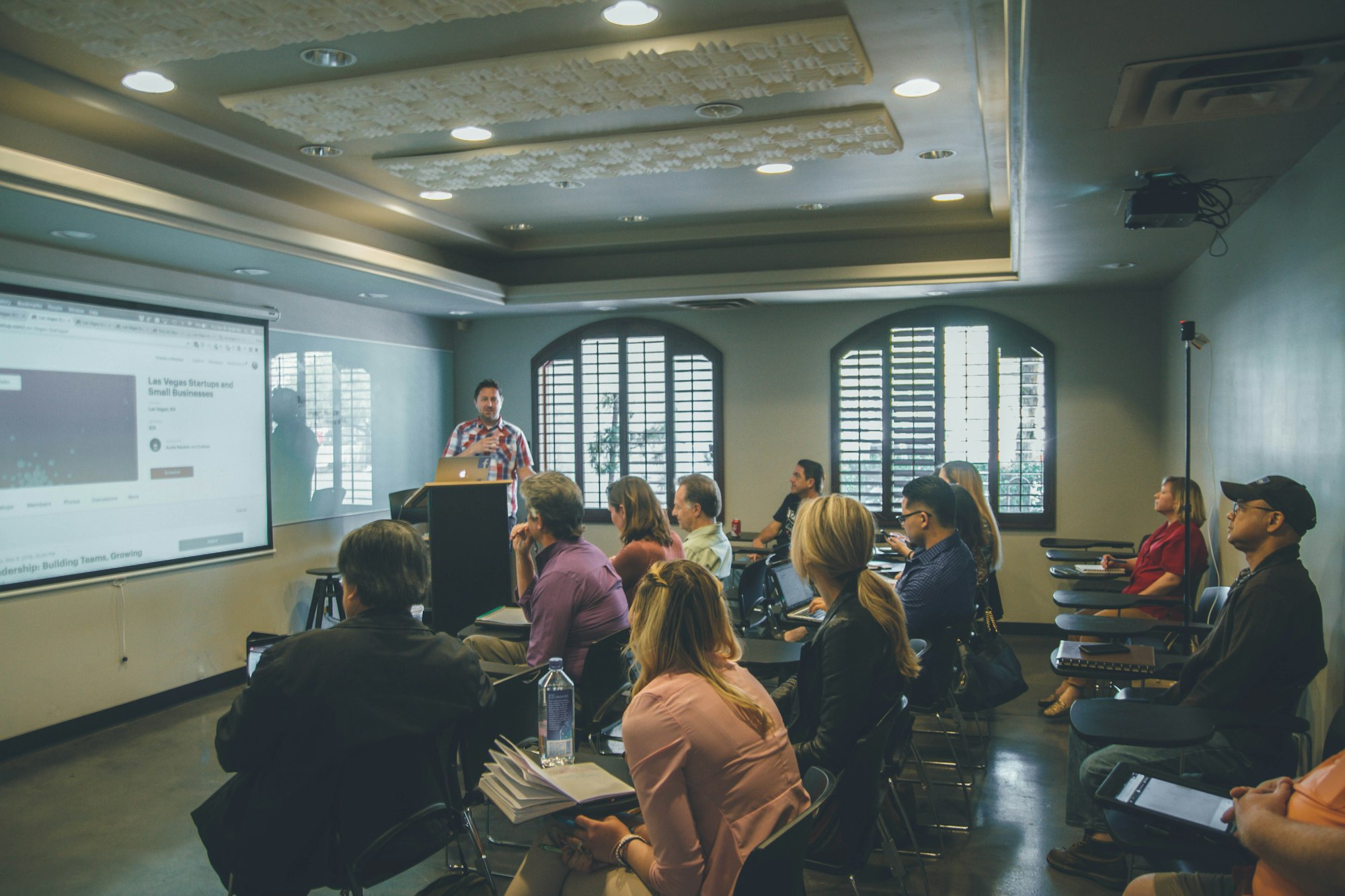
During the summer of 2024, we observed a GCC bank use the reduced operational tempo to run a targeted CX academy for its retail operations team. Instead of mapping a fictional service, the cohort mapped the bank's actual mortgage onboarding journey. They identified that a specific compliance check was causing a four-day delay. Because they understood both the operational constraint and the customer impact, they redesigned the workflow to run in parallel with credit scoring. This is the value of applied learning. A strong curriculum moves from empathy and research to prototyping and benefit realisation. We explore similar approaches in Design Thinking Capability Building for Engineering Teams.
How do we measure the operational impact of design thinking?
We measure the operational impact of design thinking through benefit realisation metrics such as reduced handle times, lower cost to serve, and improved first-contact resolution. If the application of design thinking does not move a measurable operational or financial metric, it is not transformation.
Experience is the strategy, not the decoration. Therefore, the metrics must reflect business performance. Gartner research from 2023 found that 64 percent of customer-facing employees say unnecessary effort prevents them from delivering higher-quality experiences. When operations teams apply design thinking to remove that effort, the results appear in operational efficiency. We track these outcomes through rigorous CX management loops, ensuring that every mapped journey ties back to a financial or operational baseline. Forrester reported in 2023 that CX leaders grow revenue 1.7 times faster than CX laggards. That growth is funded by the operational efficiencies gained when journeys are designed correctly the first time. For a deeper dive into measurement, review Tracking Digital Transformation Benefit Realisation in Retail.
What is the timeline for customer experience capability building and independent execution?
The timeline for customer experience capability building and transitioning to independent execution typically spans six to nine months. This period moves teams through foundational knowledge, guided application, and finally, autonomous journey management.
We structure this transition using our core methodology: Know, Design, Implement, Sustain.
- Know (Months 1-2): Assess current operational maturity and train the core team in design thinking and journey mapping fundamentals.
- Design (Months 3-4): The internal team maps a live, low-risk customer journey alongside our practitioners, learning to identify friction and operationalise solutions.
- Implement (Months 5-6): The team executes the redesigned journey, measuring the impact against baseline operational metrics.
- Sustain (Months 7-9): The team takes full ownership of the CX management loop, mapping and optimising new journeys independently while we step back into an advisory role.
This phased approach ensures that simplicity is achieved without overwhelming the business. The post-Eid period is an ideal starting point for the 'Know' phase, as outlined in CX Operating Model GCC: Aligning for the Post-Eid Slowdown.
The decision facing transformation directors is straightforward. You can continue renting external expertise to fix broken journeys, or you can equip your own teams to design them correctly from the start. If you are ready to turn your operations team into a driver of measurable business advantage, explore our CX Transformation practice to begin shaping the systems and strategies that drive growth.
Experience is the strategy, not the decoration, and it requires internal capability to sustain momentum long after the consultants leave.
Frequently asked
What is the first step in training operations teams in journey mapping?
The first step is assessing the current operational maturity and establishing a baseline of existing customer friction. We then introduce the core team to design thinking principles, ensuring they understand how to view internal processes from the customer's perspective before attempting to map any live journeys.
How does journey mapping differ from process mapping?
Process mapping focuses on internal workflows, system handoffs, and efficiency from the organisation's perspective. Journey mapping captures the customer's emotional state, expectations, and friction points across those same touchpoints. Effective customer experience capability building teaches operations teams to overlay the customer journey onto their existing process maps.
Why is the summer period ideal for capability building in the GCC?
The post-Eid summer months in the GCC typically bring a reduction in operational tempo and customer transaction volumes. This seasonal slowdown creates a rare window of capacity, allowing transformation directors to pull key operational staff into training and capability building programmes without disrupting daily business performance.
Can we build internal CX capability without external support?
While possible, building internal capability entirely alone often results in teams mapping their own biases rather than actual customer reality. An external partner provides the initial methodology, objective facilitation, and structured frameworks like the Design Value Model, accelerating the transition to independent execution while avoiding common structural mistakes.
The Table
Talk this through with us.
If this is live in your organisation right now, take it to the table. Forty-five minutes with an advisor who works on exactly this.
Choose your conversation
Pick the sitting that fits, at a time in your own timezone.
Shape the agenda
Tell us what you're trying to fix, in your own words.
We arrive briefed
A senior advisor reads your note first. You leave with a straight answer.
Send this on
LinkedInSources
Where this goes next
Put this to work with CX Transformation.
Describe where your experience breaks down and we'll read it back to you — the pattern, the likely causes and the first move — before you give us a single detail about yourself.
Get a read on your situation